The short answer
Visit Amritsar between late October and March. Daytime temperatures sit at a comfortable 15–25°C, the skies are usually clear, and standing barefoot on the Golden Temple marble at dawn is pleasant rather than punishing. December and January are the coldest — mornings drop to 4–8°C and fog can delay flights and trains — but the light is beautiful and the crowds thin on weekdays.
The single best month is February. You get 10–24°C, dry days, mustard fields in yellow bloom on the drive out to Wagah, and the tail end of the winter festival calendar. If you can only pick one week, aim for mid-February.
Month by month
November: 12–27°C, clear once the post-harvest stubble smoke clears mid-month — check the AQI before booking late October or the first week of November, when Amritsar’s air quality can spike past 300. December: 4–19°C, dense morning fog is the main risk; build a buffer day around flights and the Delhi–Amritsar train. January: coldest at 4–17°C, but Lohri (13 January) is a genuine highlight with bonfires across the city.
March: 14–29°C and still comfortable early in the month, with Holi bringing colour and crowds. April to June: 25–43°C and brutal — the marble at the Golden Temple is unwalkable by midday and only the early-morning and late-evening hours are bearable. July to September: monsoon, 27–36°C with humidity, sudden downpours, and the lowest hotel rates of the year if you can handle the heat.
Timing your visit around the Golden Temple and Wagah
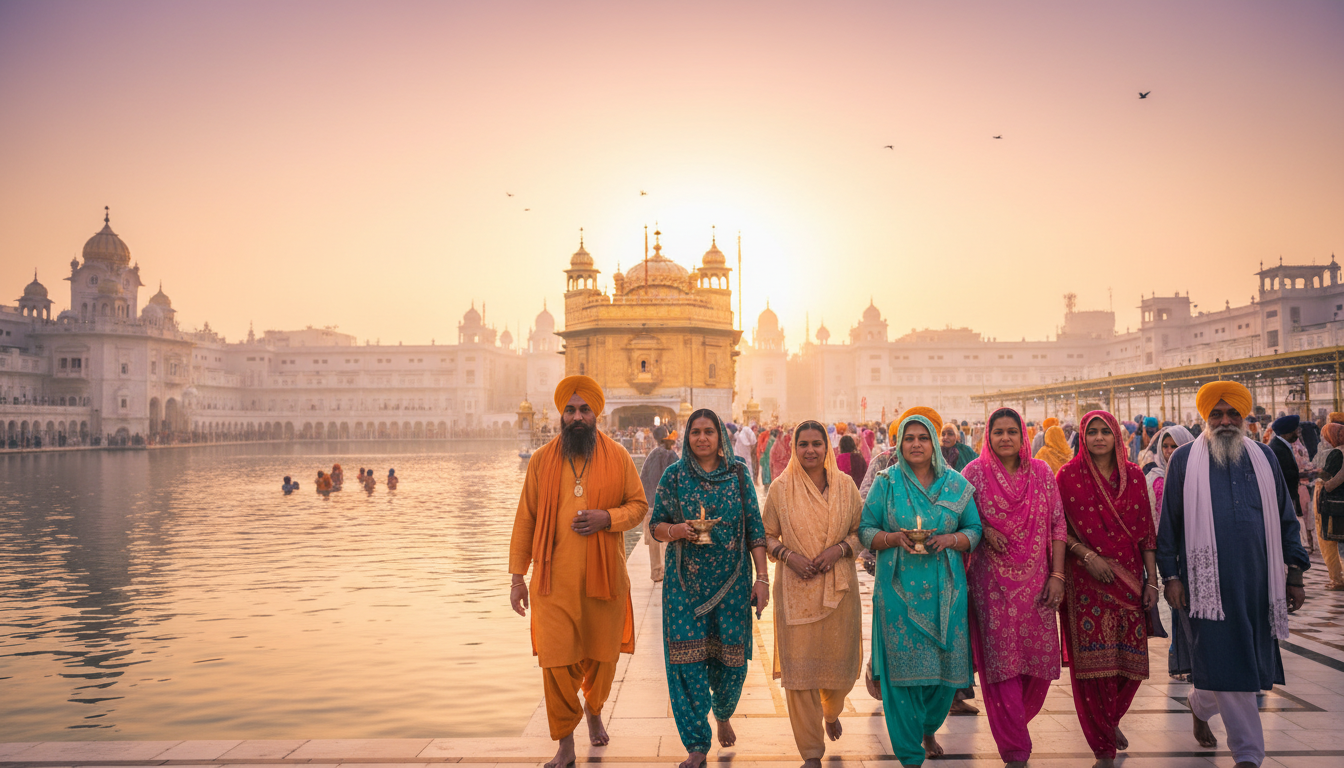
Whatever month you come, the two set-piece experiences reward specific timing. See the Golden Temple twice: at 4am for the Palki Sahib procession that carries the Guru Granth Sahib into the sanctum, and again at 9pm for the closing ceremony when the temple is lit and the crowds have thinned. In summer these off-peak hours are also the only comfortable time to be on the marble.
The Wagah border flag-lowering ceremony runs every evening about 45 minutes before sunset — roughly 4:15pm in winter and 5:45pm in summer. Arrive at least 90 minutes early for a seat, more on weekends and national holidays (15 August and 26 January), when the stands fill fast and the energy is at its peak.
When it is cheapest
Hotel rates in Amritsar track the weather. The October-to-March peak pushes four-star rooms to their highest prices and fills the better-value properties near the Golden Temple days ahead — book early for weekends and around Lohri, Baisakhi, and the two national holidays. In the April-to-September off-season you can often walk in and negotiate, with three-star rooms dropping to around $30–40 a night.
If your priority is the lowest price and you can tolerate heat or rain, July and August are the bargain months. If your priority is comfort and the festival calendar, pay the peak-season premium for November to February — it is worth it.
Questions, answered
Hotels in Punjab
See all stays →Curated picks are coming — meanwhile, the live search covers every bookable property at the same price or better.